ZeroHedge offers a complete guide on how to survive market volatility with smart strategies and insights from to protect and grow your investments.
Investing in the financial markets can be fulfilling, but it can also be extremely risky. The stock market, bond market, and other forms of financial assets are subject to drastic change in prices. These changes are called market volatility. Surviving a volatile market can be difficult, but it is possible to not only overcome the challenges, but also profit from them.
In this article, we will discuss about tips and strategies that will help you manage market volatility. We will also see how a renowned financial news website ZeroHedge helps in analyzing the challenges.
Table of Contents:
What is Market Volatility?
Market volatility is defined as the degree of price movement of an asset within a given time period. Prices can rise sharply, fall sharply, as well as remain stagnant. Any market is susceptible to volatility for myriad reasons, including economic data, political events, or investor sentiment.
For example, if earnings posted by a company are well below market expectations, the company’s stock price may decline. In the same way, political news regarding a crisis in a significant economic country can result in a severe response in the market.
ZeroHedge frequently writes on the topic of market volatility. It attempts to explain the consequences of such swings to investors and warns the audience of the fact that markets can never be completely forecasted.
Markets tend to fluctuate for reasons that are quite random at times. Being familiarized with market volatility is the preliminary step to surviving and succeeding as an investor.
What Causes Market Volatility?
Markets can be susceptible to volatility for numerous reasons and the following are some of the most important factors that can cause a sudden surge in market instability.
Data and Reports Related to the Economy
Changes in economic data can cause frequent fluctuations in the market. For instance, every time the government announces new unemployment numbers or inflation reports, the market could react. If their estimates are more positive than what was predicted, then the investors will be optimistic which will increase stock prices.
However, if the results are more negative than expected, then fear will come in leading to selling of stocks and decreasing its prices. ZeroHedge analyzes these discussions and how these reports influence the movement in the market.
Geopolitical Events
Markets are always responsive, positive or negative, to foreign events. For example, political wars, instabilities, and trade disputes could have far-reaching effects on market stability. Take the U.S. China trade disputes, it resulted in the stock prices fluctuating a lot.
The Brexit vote in Britain also lead uncertainty and seeing price changes. ZeroHedge captures geopolitical events very thoroughly and analyze how these issues change international markets and help investors design their responses.
Monetary Bank Strategies
Central monetary authorities, for instance the Fed, alter their interest rates to manage their market activity. An increase in interest rates, for instance, reduces borrowing, which may lower spending and stock prices.
Conversely, a central bank action that decreases the interest rate usually has the opposite effect. It encourages borrowing, which raises spending and stock prices. This has been noted by ZeroHedge, which pays attention to the activities of central authorities and how it affects the markets.
Feelings Toward Investments
Traders’ feelings and attitudes towards the sentiment can also change the state of volatility. Optimistic investors intend to trade more, which may increase prices. On the other hand, bearish investors tend to exit their trades rapidly, which may drop prices.
The following phenomenon is captured by ZeroHedge where investors’ behavior, alongside the rationale behind such behavior, affects the market. The body discusses how emotions, whether that of fear or greed, can instigate drastic changes in the market’s prices.
Why Does the Volatility of the Market Matter for Investors?
Volatility is especially important for investors since it captures the market sentiment and the economic standing. If you have stocks, bonds, or other financial assets, the prices associated with these resources always pose a threat to your financial portfolio.
The more pronounced the volatility, the more drastic the values of your investments can dip or spike. For some investors, such phenomena creates fear, but for others, volatility provides an opportunity to reap assets at far more reasonable prices.
ZeroHedge provides deep analysis on the volatility of the market. This helps investors devise a strategy that mitigates risk during certain times of the year. For instance, the website often illustrates that volatility can sometimes be great. Investors can take advantage of price movements by divesting perceived value to shares.
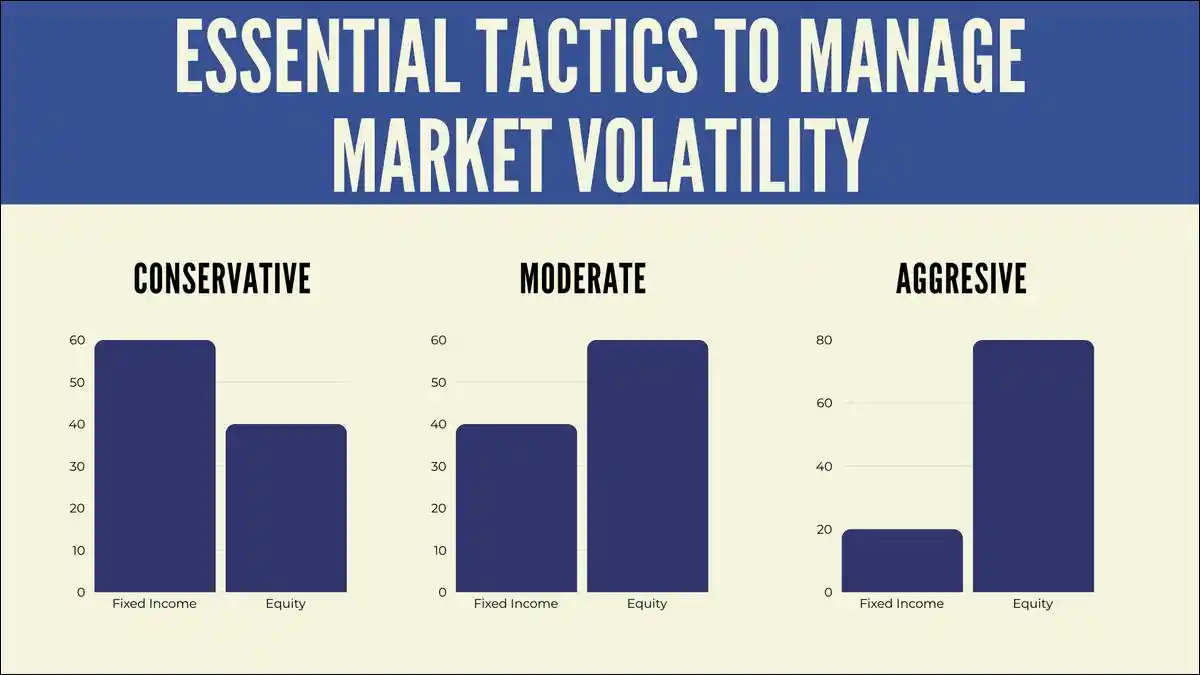
Essential Tactics To Manage Market Volatility
Steering through tough and uncertain times requires attention to detail in the planning and decision-making processes.
Here are tactics that would assist you traverse through turbulent regions.
Diversification
Diversification comes first as the most important strategy for preventing losses stemming from market swings. This strategy entails dividing one’s investments by type of asset and security. Rather than investing in a single stock or bond, you invest in multiple instruments.
In this way, if one investment suffers a loss, the gain from another investment compensates, thereby helping to manage the risk. For instance, you might own stocks, bonds, real estate, and commodities such as gold. By doing so, the chances of suffering financial loss due to underperformance of one asset class are minimized.
ZeroHedge often illustrates the diversification argument. The website asserts that the holding of varying assets dampens the effect of market volatility on one’s portfolio.
Stop-Loss Orders
Another important strategy to handle volatility is the precaution stop-loss order. This is an order you can give to your broker, and it sells an asset automatically once its price drops below a set level. Stop-loss orders assist in providing protection from massive losses.
Consider the example in which you own a stock and the stock’s price decreases by 10%. Once the predetermined range is reached, the stop-loss order triggers a sell. In this way, you avoid losing too much when market moves are against you.
Mark McCulloch explains how employing stop-loss orders can be beneficial for investors, especially during chaotic market swings. Such measures could preserve a trader’s financial position and avoid indiscriminate selling at a loss.
Hedging
To hedge is to attempt to minimize a loss by counteracting it with an offsetting position. More commonly, a hedge refers to making an investment that is designed to reduce the risk of adverse price movements in an asset.
An example of a hedge is an options contract used to speculate on the future value of an asset by buying a put option; the value of a put option increases when the price of an associated stock drops.
Hedging involves a great deal of sophistication as it relies on complicated financial products, something amateur investors are often not comfortable with. Even so, ZeroHedge argues that hedging can be beneficial in narrowing down risk exposure in highly uncertain market scenarios.
Managing Emotions In Decision Making
Even the slightest change in market emotions has a profound impact on investment strategies and decisions. During periods of market volatility, for example, many people begin making decisions out of panic — usually, a bad one.
Losing money can cause panic selling of assets and equities, while greed can lead to an unsustainable rise market by purchasing poorly. People might start delaying selling assets at the right time.
When it comes to panic selling and market volatility, ZeroHedge reminds its followers to have patience and trust their strategy. Staying put with your current investment strategy is necessary, even when the market becomes extremely unpredictable.
It is not uncommon for an asset to go on a rollercoaster ride in terms of valuation, which is something investors should expect fairly often. With these strategies and approaches, ZeroHedge encourages followers to think in the long-term.
How Investors Deal With Volatile Markets
Long term investors place a high importance on the underlying fundamentals or their companies due to market volatility. Knowing that volatility occurs due to daily changes in the market, they ignore short term price fluctuations.
With the expectation of long and sustainable business growth, these long-term investors use their quality investments as tools to create value over time.
It is common for investors to focus on the long term, particularly when considering market movements. Long-term investors tend to fold during market volatilities, however, ZeroHedge asserts that solid investments will yield positive returns over time.
Long term investors tend to understand that during major market crashes, prices are likely to fall but the market will recover in due time.
Volatility Can Present Opportunities
Dips in the market, volitility, is troubling for many investors but practicing denim style investing can be benificial. A dip in prices equalouble to a shift in market supply and demand can serve as a moment for growth.
Prices for higher quality investments being put on sale gives opportunists an ability to scooch in and buy lower quality assets at a higher price. ZeroHedge suggests my theory.
DCA limits investment to a certain value, giving an investor the opportunity to benefit from price drops. Regular investment becomes constant regardless of the current state of the market.
With this strategy, more shares can be bought when prices are lower and less during high price conditions. Implementing this strategy over a period of time serves to lessen the effects of volitility on your portfolio.
ZeroHedge also supports the theory of contrarian investing which states assets can be purchased at a lower price once the market drops. Low market prices make their purchase feasible. Once the market is more stable, these assets will appreciate while the investor profits.
Staying Informed
According to ZeroHedge, it is imperative to remain updated during turbulent times. Following the most recent news regarding finances and analyzing the market helps you understand what is leading to the volatility. This aids in making more educated decisions regarding your investments.
ZeroHedge is a perfect example of a company that helps its clients understand the movements of various markets. It offers minute by minute news, analysis and commentary from experts on the influence of international affairs on financial markets.
To be informed also includes knowing the impact of policies from the central banks and other economic data as well as geopolitical matters on your investments.
Utilizing Data and Analysis Tools
These investment decisions cannot be made without applying analysis and data tools. ZeroHedge often features charts, technical analysis, and other pertinent market indicators. These tools are critical for any investor since they identify shifts in the markets.
Employing these tools enable more educated decisions to be made during volatile periods. For instance, technical analysis can show the movement of a stock, whether it is in a bullish or bearish direction. With these tools, it is also much easier to spot chances when markets are highly active.
The Effect of Central Banks in Volatility
The U.S. Federal Reserve and other central banks substantially impact market volatility. They govern monetary policy and control interest rates and the money supply.
Changes in the central bank’s policies can lead to changes in the markets. For instance, increased interest rates by the Fed would likely reduce asset prices. The actions of central banks and their effects on financial markets are a constant focus of attention for ZeroHedge.
Final Thoughts!: Reducing Volatility Through Smart Management
Although daunting, having the right tools and strategies in place can assist you in managing market volatility. Long-term, diversification, calmness, and stop-loss orders can work together to ensure that your investments are protected in times of uncertainty. ZeroHedge gives you the tools needed to comprehend how to manage volatility, assisting you in these difficult moments.
Furthermore, volatility is also beneficial for investors who are ready to take advantage of it. Staying up to date on price fluctuations and employing methods such as dollar cost averaging and contrarian investing can open up opportunities. Always keep in mind the fact that market volatility is a natural occurrence. To navigate through turbulent waters, the most important thing is to have a good plan in place and remain dedicated to it at all times.
With the help of the right tools and knowledge of market volatility, not only can you survive, but also prosper in turbulent times.