Countries of all kinds want to take over the services of Intel, TSMC and Samsung, they are the big three, the ones that will define the future of the planet in terms of semiconductors and for this reason the EU and the US have entered into direct competition to open the FABs that will give life to the new maximum performance chips, but… India also wants a piece of the cake.
Samsung leaves the scene, GlobalFoundries enters
The election of the new president of South Korea seems to have played a key role in Samsung, a private company that is practically considered public and that is now in protectionist mode after the script twists of local politics. In return, GlobalFoundries enters the world scene again thanks to India, since the two companies are in talks to draw up a sustainable growth plan based on new FABs in the territory of said country.
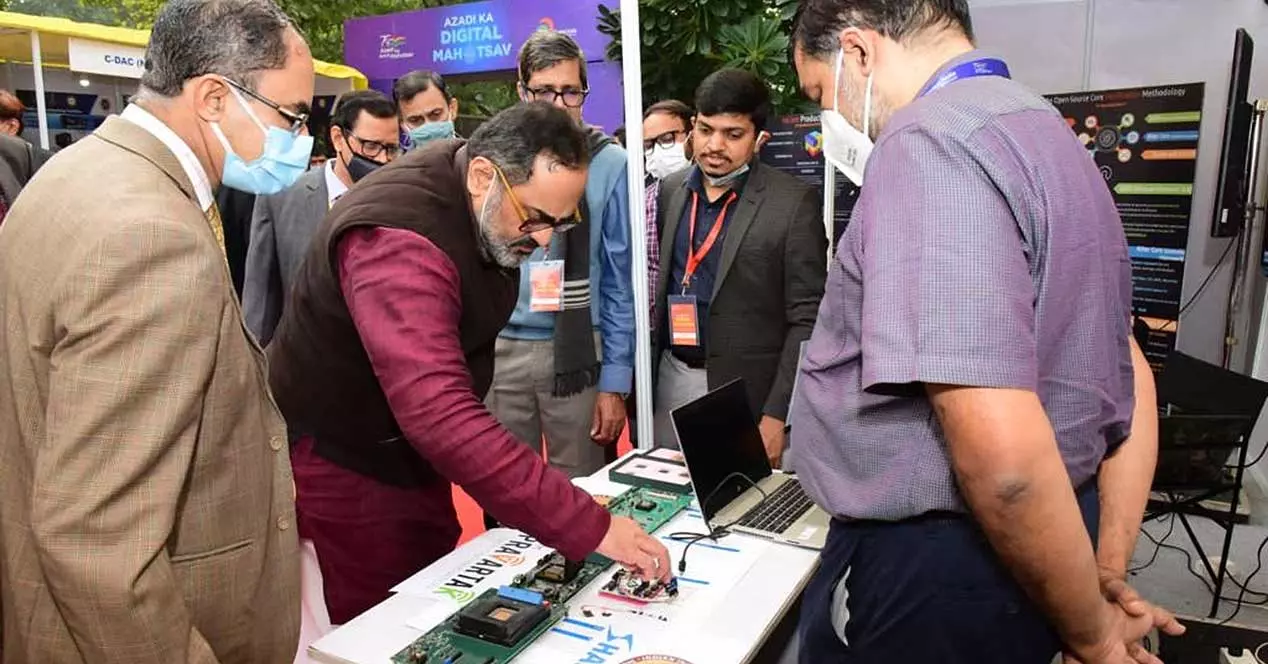
Rajeev Chandrasekhar, a former Intel engineer and current Minister of State for Technology and Entrepreneurship, is in charge of the talks with these three giants, where he has already met with the three aforementioned companies and has explained his country’s plans to them.
Can India compete with the US and the EU to take away FABs that should be on Western soil? Well, there are lights and shadows that should be understood and that we are going to see next.
India, Intel, TSMC and the FABs: strengths and weaknesses
The Indian government offers nothing less than 10 billion in an incentive plan that also has as its main claim to cover half the cost of the FAB project, as long as they establish a base of operations in their country and not just a factory as such. The objective is clear copy China’s strategy and become the world’s new electronics and chip production factory.
Having explained the virtues and without forgetting the reduced cost in salaries and social security for workers in that country (less than half that in the US and the EU currently) we go with the problems that India faces to be able to snatch from the two continents said FABs. The main problem that the Asian country has is logistics, water supply and energy.
Intel and TSMC are too demanding with these terms, they need a good production and distribution chain, good infrastructure, fast and efficient, as well as very strict water management and, above all, stability in energy delivery and power.
India’s problems outweigh the advantages
Here India does not really have much to offer against its rivals, but it could design a strategic plan that somehow ensures the requirements of both and thereby position itself as an interesting option. Also has sufficient manpower and in certain sectors very qualified, so with low wages and good workers it is a more interesting option than those offered by the West, which do not have workers to cover the demand.
Pat Gelsinger visited India earlier this month and was followed by a delegation led by the executive director of the US Semiconductor Industry Association, John Neuffer, so this is very serious. The event for these is organized for this Friday and from there the first conclusions can be drawn, where the first interested party would be TSMC due to the problems between Taiwan and China.
And it is that there is speculation about a surprise attack by the second towards the first shortly to annex it by force, which is why the Taiwanese are diversifying their infrastructure throughout the West and possibly also in Japan, a country that is preparing the counteroffensive to the billionaire investment plans of its Western rivals. In case you had not noticed, this has only just begun and the global scene is heating up to see who dominates the semiconductor and chip industry.