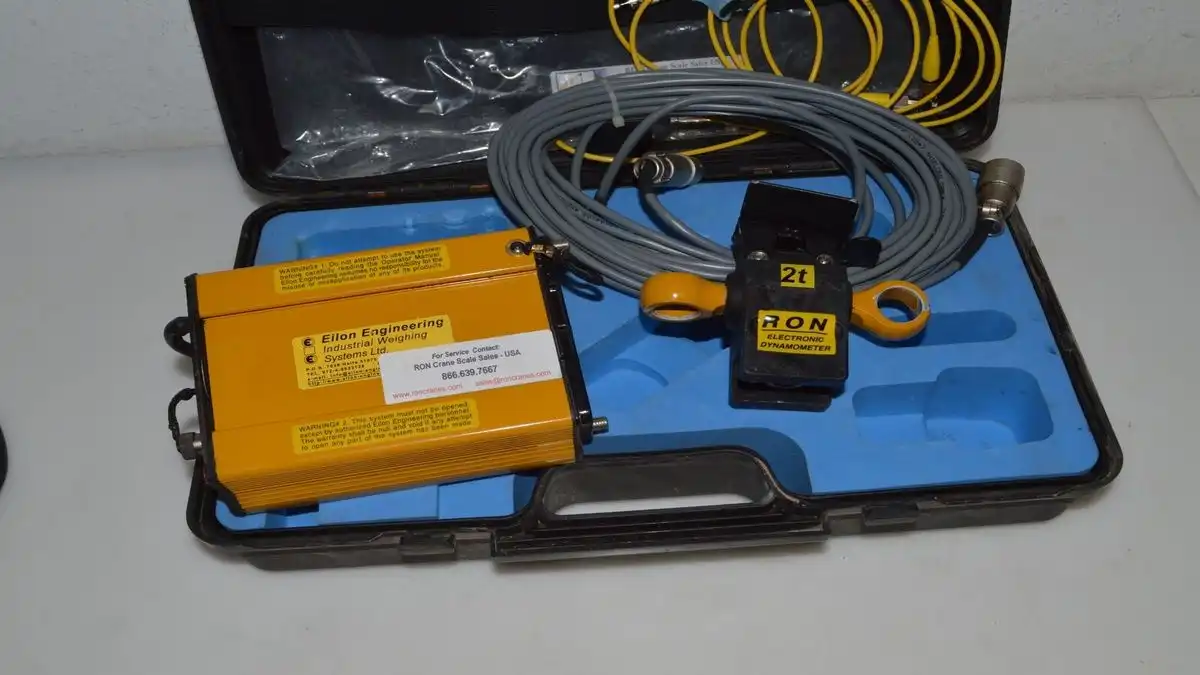
Many businesses utilize wired dynamometers to measure force, tension, and weight precisely. They ensure lifting safety, construction structural integrity, material testing, and quality control. This article discusses wired dynamometers’ major features, their importance, and how to choose one for your requirements.
1. Accurate and precise
Accuracy is crucial to a wired dynamometer. Data dependability requires accurate force measurement. High-quality wired dynamometers typically have an accuracy of ±0.1% of full scale. Applications, where even tiny variations may cause mistakes or safety hazards, need this degree of accuracy.
Precision is as crucial as accuracy. Dynamometer precision is its ability to provide consistent readings throughout many measurements. Materials testing and quality control need repeatable and accurate data, therefore, consistency is essential.
2. Strong Construction and Durability
Durable materials like alloy steel or aluminum are used to make wired dynamometers. These materials are strong enough to tolerate severe temperatures, humidity, and mechanical shocks.
Dynamometer durability depends on its design. Durable construction guarantees the gadget can withstand severe usage and retain accuracy. Wire dynamometers are often water-resistant and dust-proof, making them useful for construction sites and factories.
3. Clear Display
A connected dynamometer with a big, clear display is more usable. The display should be legible from afar and in poor light. Backlit screens are beneficial in dimly lighted areas.
The display should show current force, max force, and units of measurement. Some sophisticated versions include real-time graphical representations of trends and fluctuations to improve data processing.
4. Capacity Variety
Wired dynamometers have varying capacity for different purposes. Whether you need to measure tiny forces in the lab or enormous loads in industry, a versatile dynamometer is essential.
Overload prevention is another capacity-related function. This allows the dynamometer to withstand occasional overloads without harm. Overload prevention is critical in contexts with unpredictable or fluctuating loads.
5. Interface and controls
The dynamometer should have simple controls and an understandable UI. This simplicity allows operators with little training to operate the device, decreasing mistakes.
Easy calibration is also crucial. The dynamometer needs regular calibration to stay accurate and reliable. A device with simple calibration instructions and automatic calibration options saves time and reduces calibration errors.
6. Safety Features
ISO, CE, and UL certifications assure the dynamometer satisfies safety and performance requirements. Certified devices have been rigorously tested for safety and reliability.
Some wired dynamometers alarm when force exceeds limitations. Alarms may be visible, aural, or both to avoid overloading and accidents.
Advanced wired dynamometers provide easy data analysis and reporting via software integration. Visualizing data, doing complicated computations, and generating reports using software makes data interpretation and application simpler.
7. Ecological adaptability
In severe temperatures, the dynamometer’s functioning temperature range is crucial. Check that the gadget works properly in your application’s temperature range.
High humidity or moisture exposure requires a dynamometer with moisture resistance. Devices with IP65 or IP67 certifications are better dust and water proof.
## Conclusion
Consider accuracy, durability, usefulness, and safety while choosing a wired dynamometer. Evaluations should include accuracy, precision, sturdy construction, clear display, broad capacity range, data recording, connection, user-friendly interface, safety features, software integration, portability, mounting choices, and environmental adaptation.
A high-quality wired dynamometer customized to your demands will increase measurement accuracy, dependability, operating efficiency, and safety. By considering these top qualities, you may pick a dynamometer that fulfills your application’s needs and helps you succeed.


![What to do if my Zara order does not arrive or has been lost [2021]](https://techunwrapped.com/wp-content/uploads/2021/02/1580-atencion-al-cliente-zara.jpg)