Imagine your phone system crashing right before a big client call. Or your internet dropping during a busy sales day. These telecom problems can stop your business cold and cost you money. But what if you could pass these headaches to an expert? That’s where managed telecom services come in.
In this article, we’ll dive into what managed telecom services are, why they matter to businesses, and how to pick the right provider. We’ll also explore the different types of services and peek into the future of this industry.
Whether you run a small startup or manage IT for a big company, this guide will help you understand how managed telecom services can boost your business.
Table of Contents
What Are Managed Telecom Services?
Managed telecom services mean handing over your business’s communication systems to a third-party expert. These providers take care of everything—phones, internet, security, and more. You don’t need to worry about the tech details. They handle it all.
So, what do these services cover? Here are some examples:
- Voice Services: Think traditional phone lines, Voice over IP (VoIP), or platforms that mix voice, video, and messaging.
- Data Services: This includes internet access, wide area networks (WANs), and local area networks (LANs).
- Network Security: Tools like firewalls and intrusion detection to keep your systems safe.
- Cloud Services: Hosting your telecom tools online for easy access and flexibility.
The provider sets everything up, keeps it running, and fixes problems. Your business gets reliable communication without needing a full-time telecom team.
Why Choose Managed Telecom Services?
Why do companies go for managed telecom services? Let’s break it down.
First, cost savings. Hiring telecom experts in-house can get pricey. You need to pay salaries, train staff, and buy equipment. Outsourcing cuts those costs. Providers often have better deals on tech and services because they work with many clients.
Next, scalability. Your business might grow fast—or slow down. Either way, your telecom needs change. A managed provider can adjust your services quickly. Need more phone lines? Done. Cutting back? No problem.
Then, there’s reliability. Downtime hurts. If your internet or phones fail, you lose sales or upset customers. Managed providers watch your systems 24/7. They spot issues before they blow up and keep things running smoothly.
Finally, peace of mind. Telecom can be complicated. New tech pops up all the time. By outsourcing, you let experts handle it. Your team can focus on what you do best—running your business.
A report from MarketsandMarkets says the managed services market will jump from $223 billion in 2020 to $329.1 billion by 2025. That’s an 8.1% growth rate every year. Why? Businesses want to focus on their main goals and use cloud tech more.
Types of Managed Telecom Services
Managed telecom services come in different flavors. Each type solves a specific need. Let’s look at the main ones.
Voice Services
These cover how your business talks. Old-school phone lines still exist, but VoIP is taking over. VoIP uses the internet for calls, saving money on long-distance charges. It also adds cool features like call forwarding or voicemail-to-email. Unified communications take it further, blending voice, video, and messaging into one tool. This makes teamwork easier.
Data Services
Data services keep you connected. Think internet, WANs, and LANs. Providers make sure your connection is fast and stable. They can also manage bandwidth—prioritizing key apps so your video calls don’t lag during a big meeting.
Network Security
Cyberattacks are everywhere. Managed security services protect your network. Firewalls block threats. Intrusion detection spots hackers. Secure remote access lets your team work from anywhere safely. This is huge for keeping customer data safe and meeting rules like GDPR or HIPAA.
Cloud Services
Cloud services move your telecom tools online. Hosted VoIP, collaboration apps, and data storage all live in the cloud. This cuts the need for big on-site equipment. Plus, your team can access everything from anywhere.
Each service can fit your business like a glove. A good provider tailors them to what you need most.
Choosing the Right Provider
Picking a managed telecom services provider isn’t a quick decision. The right one can save you time and money. The wrong one? Frustration and lost business. Here’s what to look for.
First, track record. Find a provider with happy clients in your industry. Ask for case studies or references. If they’ve helped businesses like yours, they’ll likely help you too.
Next, service level agreements (SLAs). These are promises about uptime and support. A good SLA says how fast they’ll fix problems and how often your systems will work. Check it matches your needs.
Then, scalability and flexibility. Your business won’t stay the same. Choose a provider that can grow with you. Can they add services as you expand? Will they adapt to new tech?
Also, customer support. Issues don’t wait for business hours. Look for 24/7 help. A dedicated account manager is a bonus—they’ll know your setup and fix things faster.
Finally, pricing. Make sure it’s clear. Hidden fees can sting. Ask what’s included and what costs extra. Compare a few providers to get the best deal.
Take your time here. A solid partner makes all the difference.
The Future of Managed Telecom Services
Telecom isn’t standing still. New tech is changing the game. Managed providers need to keep up. Here’s what’s coming.
5G Technology
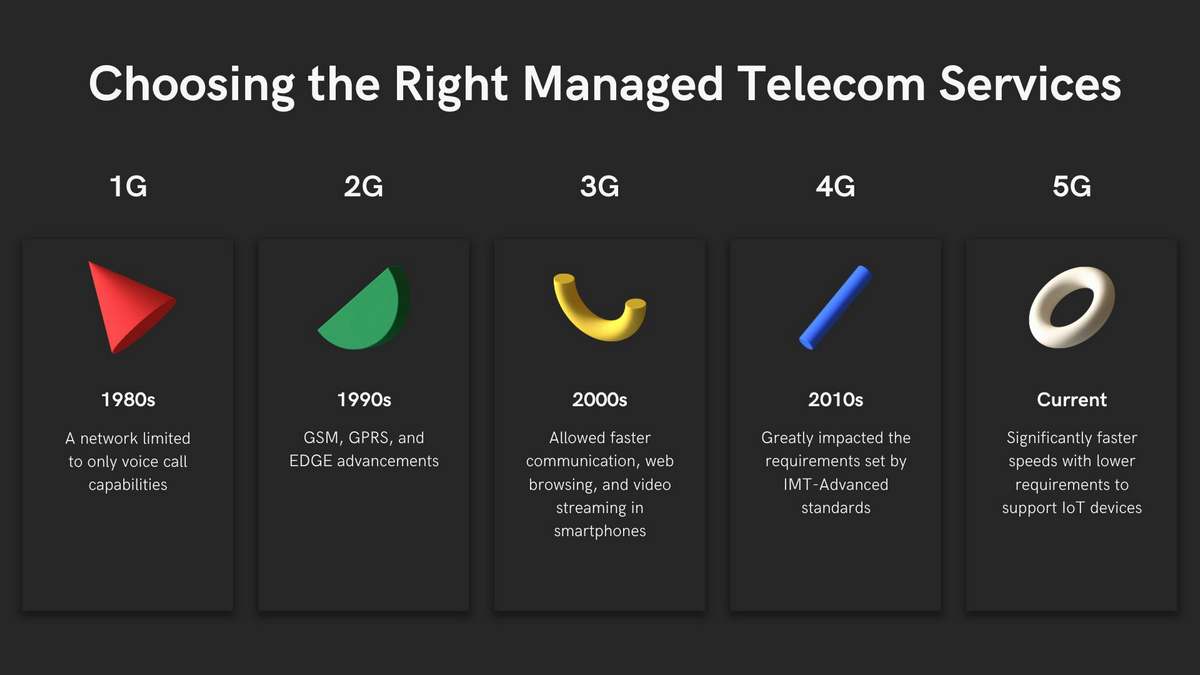
5G is rolling out fast. It’s not just quicker internet for your phone—it’s a business boost. Faster speeds and better reliability could transform healthcare, manufacturing, even self-driving cars. Providers will weave 5G into their services to keep clients competitive.
Internet of Things (IoT)
More devices are getting smart—think sensors, cameras, even fridges. IoT means more data on your network. Managed services will need to handle this flood, keeping everything connected and secure.
Artificial Intelligence (AI)
AI is a game-changer. It can predict problems before they hit, cutting downtime. It also powers chatbots for customer service or analyzes data to improve your network. Expect providers to lean into AI hard.
Cybersecurity
Hackers aren’t slowing down. As threats get trickier, security gets tougher. Managed services will add real-time threat detection and auto-fixes. Protecting your data will stay a top priority.
A Grand View Research report predicts the managed services market will hit $557.1 billion by 2028. That’s an 11.2% growth rate from 2021. Cloud tech and efficiency demands are fueling this rise.
Wrapping up!
In today’s world, good telecom isn’t optional—it’s everything. Managed telecom services keep your phones ringing, your internet humming, and your data safe. They save money, scale with you, and let you focus on your business. With the right provider, you’re set.
The future looks bright too. 5G, IoT, AI, and better security will make these services even stronger. Stay in the loop on these trends, and you’ll keep your business ahead.
Ready to ditch telecom stress? Managed services might be your answer. Find a provider that fits, and watch your communication soar.
FAQ: Managed Telecom Services
-
What are Managed Telecom Services?
Managed Telecom Services are outsourced solutions where a third-party provider manages a business’s telecom needs. This includes voice, data, internet, and network infrastructure. The provider handles setup, maintenance, and troubleshooting, allowing your business to focus on its core operations.
-
How do Managed Telecom Services differ from traditional telecom services?
Unlike traditional telecom services, where businesses manage their own infrastructure with in-house resources, Managed Telecom Services shift that responsibility to a provider. This means you get expert management without needing to handle the technical details yourself.
-
What benefits do Managed Telecom Services offer?
Key benefits include:
1. Cost savings: Eliminates the need for an in-house telecom team.
2. Scalability: Services can grow or adjust with your business.
3, Reliability: 24/7 monitoring reduces downtime.
4. Expert support: Access to specialists who resolve issues fast. -
What types of businesses can benefit from Managed Telecom Services?
Businesses of all sizes can benefit, but they’re especially helpful for small to medium-sized enterprises (SMEs). SMEs often lack the budget or expertise for a dedicated telecom staff, making outsourcing a smart choice.
-
How do I choose the right Managed Telecom Services provider?
When picking a provider, evaluate:
1. Track record: Experience with similar businesses.
2. Service Level Agreements (SLAs): Clear uptime and support promises.
3. Scalability: Ability to adapt to your growth.
4. Customer support: 24/7 availability is key.
5. Pricing: Transparent costs with no surprises. -
What should I look for in a service agreement?
A good service agreement should outline:
1. Uptime guarantees: How often systems will be available.
2. Response times: Speed of issue resolution.
3. Support availability: 24/7 access to help.
4. Clear terms: No vague or hidden clauses. -
Are there any downsides to using Managed Telecom Services?
Potential drawbacks include:
1. Less control: The provider manages your infrastructure.
2. Dependency: Issues with the provider could impact you.
3. Customization limits: Some solutions may not be fully tailored. -
How do Managed Telecom Services handle security and compliance?
Top providers use robust security tools like firewalls, intrusion detection, and secure remote access. They also ensure compliance with regulations like GDPR or HIPAA, protecting your data and keeping your business legally sound.
-
Can Managed Telecom Services help with cost management?
Yes! They optimize telecom resources, reduce downtime, and often secure better rates on equipment and services due to their scale. This leads to lower overall costs for your business.
-
What is the future of Managed Telecom Services?
The future is bright, with trends like:
1. 5G technology: Faster, more reliable networks.
2. Internet of Things (IoT): Support for more connected devices.
3. Artificial Intelligence (AI): Smarter maintenance and support.
4. Enhanced security: Advanced threat detection and response.
This FAQ provides straightforward answers to help you understand Managed Telecom Services and decide if they’re right for your business.