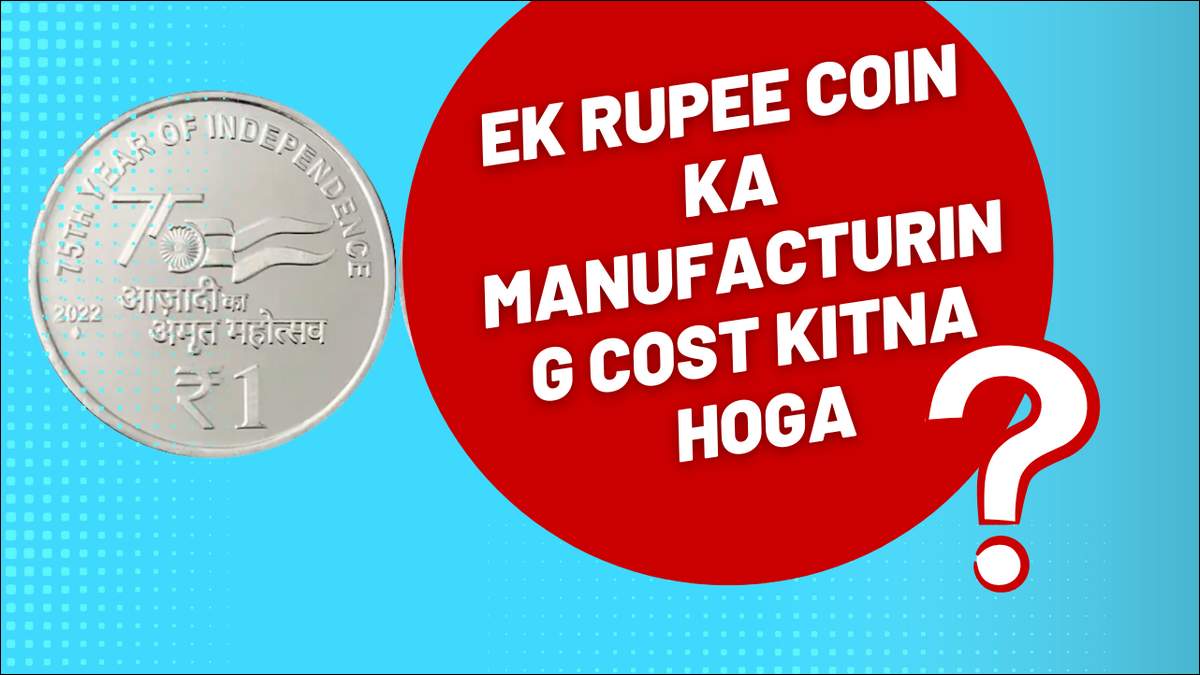
Wondering “Ek rupee coin ka manufacturing cost kitna hoga”? In this guide explains why India’s one-rupee coin costs more to make than its value. From metal prices to minting processes, inflation, and more, we break it down simply. Learn how coins stay useful, support small businesses, and why the government keeps making them despite the cost.
You’ve probably wondered, “Ek rupee coin ka manufacturing cost kitna hoga?” I mean, it’s just a tiny coin, right? But making that one-rupee coin costs more than you’d think! It’s not just about metal; there’s a whole process behind it, also economic stuff that adds up.
Let’s break it down in a way that makes sense, like we’re chatting over chai, and figure out why this coin costs more than its face value.
What Goes Into the Coin’s Metal?
Okay, so the one-rupee coin is made of stainless steel—think iron, chromium, and a bit of nickel mixed in. These metals aren’t cheap, and their prices keep jumping around because of global demand. Back in 2018, the Reserve Bank of India (RBI) said the metal alone cost about 70 paise per coin. With inflation these days, it’s probably closer to 80 or 90 paise now.
Why stainless steel? It’s tough and lasts forever without rusting. But nickel’s used in things like phone batteries, so its price can spike. That makes every coin pricier. The folks at the Security Printing and Minting Corporation of India (SPMCIL) have to shop smart to keep costs down, but it’s tricky when metal prices are all over the place.
Then there’s getting the metal to the mints. Trucking it across the country costs money for fuel and workers. It’s a small cost per coin, but when you’re making billions—like 630 million one-rupee coins in 2018—that adds up fast. Even a one-paisa bump per coin can hit the budget hard.
Also read:
- LessInvest.com Makes Financial Literacy
- CNLawBlog Offers Clear Insights Into Legal Matters
- 5starsstocks .com: #1 Reason You Should (Or Not) Trust Them
How Do They Actually Make These Coins?
Making a coin isn’t just melting metal and pouring it into a mold. It’s a big process! First, they cut metal sheets into little circles called blanks. Those get heated and cooled to make them strong. Then, huge machines stamp the Ashoka Pillar and rupee symbol onto each one. The RBI says this whole deal costs about ₹1.11 per coin—more than the coin’s worth!
People run these machines, check for mistakes, and keep things moving. Their salaries add to the cost. Plus, the mints in places like Mumbai and Hyderabad use a ton of electricity. All that energy isn’t free. So, between workers, power, and machines, the price creeps up higher than you’d expect for a one-rupee coin.
They also check every coin to make sure it’s perfect. If one’s off—say, too light or the design’s blurry—they melt it down and start over. That extra step costs more but keeps the coins legit. It’s a lot per coin, but it shows why making even a simple coin gets expensive.
Why Does It Cost More Now?
Inflation’s a big impact. Everything’s pricier now—metal, wages, you name it. That ₹1.11 figure from 2018? It’s ₹1.20 or even ₹1.28 today, depending on how you crunch the numbers. The world’s a bit unpredictable, too. If there’s a global issue, like a trade hiccup, metal prices can soar, and the mints have to deal with it.
Taxes don’t help either. Importing metals or machines comes with duties. The government tries to keep them low, but they still add up. Plus, running the mints means paying for buildings, security, and upkeep. All these little economic bits make it tough to keep the cost of a one-rupee coin below its value.
It’s not just an India thing, either. Global markets set metal prices, and we’re all in the same boat. If nickel gets pricier because of, say, electric car demand, India’s mints feel it. That’s why making coins is such a balancing act—you need the stuff to keep making them, but it’s not cheap.
Why Keep Making Coins Anyway?
Here’s the cool part: coins last a super long time. A one-rupee note might fall apart in a couple of years, but a one-rupee coin sticks around for 20 or 25 years. So, even if it costs more upfront, it’s a good deal over time. Each coin gets used in tons of transactions, so the cost evens out.
Coins are also a big deal in India. In villages or small markets, people use them for everything—buying veggies, paying for a bus ride. They’re like the backbone of small change. Even with apps like UPI, lots of folks still need coins. That’s why the government keeps making them, even if they lose a bit on each one.
India makes millions of coins every year—over 100 million across all types. That scale helps keep costs a little lower because they can buy metal in bulk. But for the one-rupee coin, the low value means it’s still a loss. It’s a trade-off to keep cash flowing where it’s needed.
What About the Environment and People?
Making coins isn’t super green. Mining metals like nickel takes energy and messes with nature. But since coins last so long, they’re better than paper notes, which need replacing often. The SPMCIL also recycles messed-up coins, which helps cut waste, even if it costs a bit more.
Coins help people, too. In rural areas, where digital payments aren’t big, one-rupee coins keep small businesses running. Without them, vendors might struggle to make change. So, the government sees it as a way to keep everyone included, even if it’s not a money-maker.
The mints also create jobs. Thousands of people work there, earning good wages. That’s great for local communities, but it adds to the coin’s cost. It’s a reminder that making coins isn’t just about money—it’s about supporting people and the economy, too.
How Does It Compare to Other Coins?
The one-rupee coin isn’t the only one costing more to make. In 2018, a two-rupee coin cost ₹1.28, a five-rupee coin was ₹3.69, and a ten-rupee coin hit ₹5.54. The bigger coins are a better deal because their value is closer to or above their cost. The one-rupee coin’s low value makes it the toughest to justify.
Ten-rupee coins are fancy, with two metals, so they’re pricier to make. But their higher value makes up for it. The one-rupee coin, being plain stainless steel, should be cheaper, but its low worth keeps it in the red. It’s a weird quirk of low-value coins.
They’ve also made fewer one-rupee coins lately—903 million in 2017, down to 630 million in 2018. Higher-value coins get made more steadily since they’re less of a loss. But people still need one-rupee coins, so cutting back too much isn’t easy.
How’s the Government Handling This?
The government’s trying to keep costs down. The SPMCIL wastes less metal by cutting blanks super carefully. They also buy metals in bulk for better deals. Newer machines use less power and need less fixing, which helps over time. It’s all about getting that ₹1.11 cost closer to ₹1.
They’re even thinking about using cheaper metals. Maybe swap some nickel for something else? But coins need to stay tough, and people need to trust them. It’s a slow process to test new mixes. For now, they’re stuck with what works, even if it’s pricey.
Digital payments could reduce the need for coins. The government’s pushing UPI, but small vendors and rural folks still need cash. So, they keep minting coins while nudging people toward digital. It’s a practical way to handle both worlds.
Why’s It Hard to Get Exact Numbers?
Getting the exact cost is tough. The RBI and SPMCIL don’t always share details. In 2018, the Mumbai Mint wouldn’t spill the beans, but Hyderabad gave some numbers. They say it’s about trade secrets. That makes it hard to know if the cost is really ₹1.20 or ₹1.28 now.
Some people guess based on old data and inflation, but it’s not official. The lack of clear info makes folks curious, and questions like “Ek rupee coin ka manufacturing cost kitna hoga?” keep popping up. If the government shared more, it’d help us all understand better.
It’s not just about hiding stuff. They might worry people will get upset knowing a one-rupee coin costs more to make. But being open could show why it’s worth it—like how coins last forever and keep small transactions going.
Also read:
- ZeroHedge Review
- Rattle Market: Navigating Volatility in Uncertain Times
- ZeroHedge: Market Volatility Survival Guide for Investors
How’s India Like Other Countries?
India’s not alone here. In the U.S., their penny costs over two cents to make! Other countries deal with this, too, and keep minting because coins last long and are handy for small change. It’s a global thing, and India’s learning from it.
Metal prices hit everyone. If nickel gets pricier, every country making steel coins feels it. India’s mints have to compete for the same stuff. Maybe teaming up with other countries for metal deals could help, but that’s tricky with global politics.
Some places talk about ditching low-value coins, but India’s not there yet. The one-rupee coin’s too important. Instead, they’re focusing on smarter production and maybe greener materials to keep costs in check while keeping coins in pockets.