The Rise of Smart Stables
The equestrian industry is rapidly adopting digital technologies, and one of the most promising directions is the smart stable horse monitoring system. Professional venues, elite clubs, and individual owners are no longer relying only on manual observation and basic video cameras. Instead, they are turning to advanced AI-driven solutions that bring a new level of safety, efficiency, and insight into horse health and behavior.
Unlike traditional surveillance, which only records video, modern stables AI platforms integrate cameras, sensors, and microcomputers into a centralized infrastructure. This allows trainers, administrators, and owners to access real-time data, receive alerts about potential problems, and analyze long-term trends in horse behavior.
Challenges in Horse Monitoring
Before implementing advanced systems, many equestrian facilities faced similar problems:
- Fragmented data from sensors and cameras without a single control hub
- Inability to interpret video streams and detect behavior automatically
- Limited personalization of dashboards for trainers, owners, and managers
- Lack of easy access to data for internal data scientists
- No unified solution for storing and reviewing video archives
These challenges slowed down stable management, made early detection of health risks difficult, and increased the workload on staff.
Smart Stable Board and Centralized Management
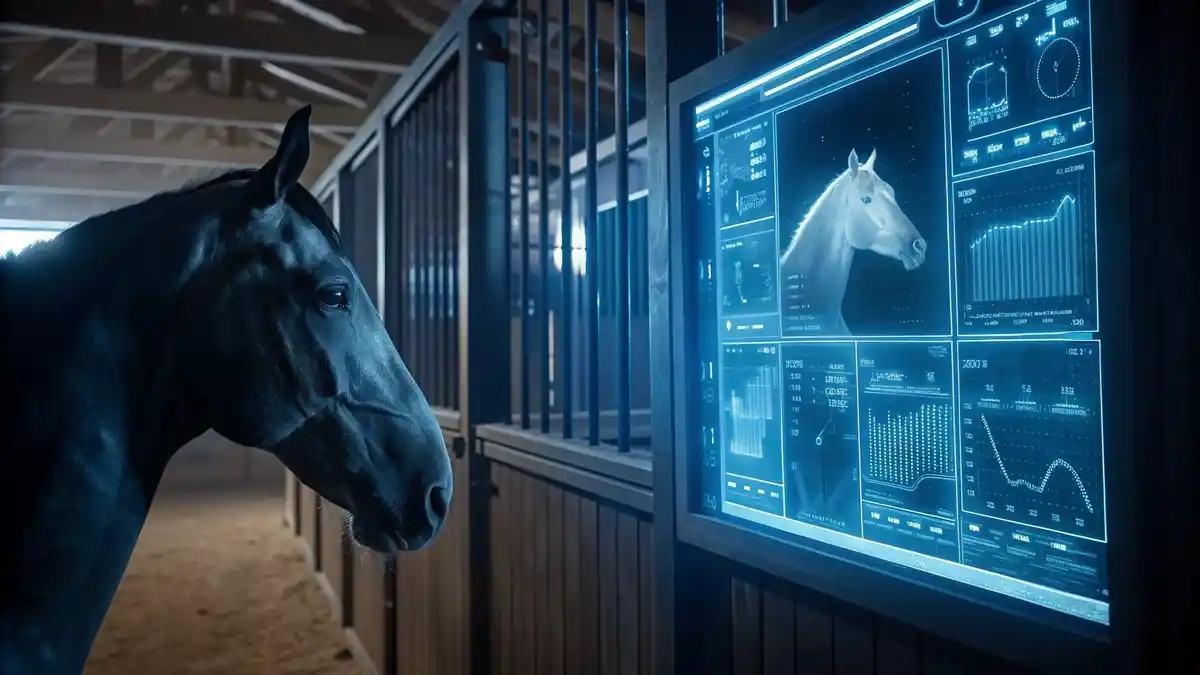
To solve these problems, a modular smart stable board approach has been introduced. This system connects multiple devices into one synchronized environment. Video streams, motion sensors, and microcomputers are integrated into a single dashboard, enabling a comprehensive view of the stable.
Dashboards can be customized depending on the user role:
- Trainers receive insights on activity levels and rest cycles
- Owners see health summaries and notifications about anomalies
- Administrators monitor infrastructure performance and system alerts
This personalized approach allows each stakeholder to focus on what matters most for them, without being overwhelmed by unnecessary information.
AI-Powered Horse Behavior Analysis
One of the strongest advantages of modern horse monitoring systems is the ability to perform horse behavior analysis with AI. Instead of just recording, the system interprets:
- Sleep patterns and rest quality
- Levels of daily activity
- Early signs of stress, aggression, or anxiety
- Detection of abnormal behavior such as colic symptoms
The platform reaches up to 87% accuracy in detecting unusual behavior. In practice, this means critical conditions can be identified much earlier, sometimes saving the horse’s life. For example, the system successfully detected colic in its early stage, allowing for timely veterinary intervention.
From Sensors to Insights: How It Works
The stables AI platform relies on several key components working together:
- Data collection from cameras, sensors, and edge devices
- Centralized storage with synchronized video and metrics
- Machine learning models trained on horse behavior data
- Interactive dashboards for different user roles
- Jupyter-based Python environment for advanced analysis by internal data scientists
This modular design makes the system scalable. Adding new sensors or cameras does not require developer assistance — the platform automatically adapts and validates incoming data.
Tangible Benefits for Equestrian Facilities
Implementing an AI-based smart stable horse monitoring system brings measurable results:
- Reduction of missed problem cases by up to 50% thanks to notifications
- Horse condition analysis time reduced from 1 hour to just 5 minutes
- Improved collaboration between trainers, owners, and vets through shared dashboards
- Reliable local storage ensuring security and privacy
- Daily use across different devices, from tablets to desktops
For many facilities, this means significant savings in staff time, fewer health emergencies, and more structured planning of training sessions.
Overcoming Technical Difficulties
Developing such a system required solving several challenges:
- Low light conditions — edge-processing and buffering ensure stable video analysis
- Heterogeneous sensor data — validation layers normalize input
- Breed-specific patterns — hybrid models were retrained for different horse breeds
- User-friendly design — simple dashboards with in-depth analytics balance accessibility and detail
These solutions make the system robust enough for real-world use in diverse stable environments.
Beyond Monitoring: Expanding Applications
The Smart Stable board is more than just surveillance. Trainers use activity heatmaps to plan workloads, while administrators generate veterinary reports directly from the platform. Internal research teams can also use the integrated Python environment for deeper studies on equine health.
This flexibility transforms the solution from a passive monitoring tool into an active management and research platform.
Conclusion
The rise of AI-driven horse monitoring systems is reshaping the way modern stables operate. By integrating cameras, sensors, and data analysis into a unified Smart Stable horse monitoring system, equestrian facilities can ensure better health outcomes, streamline management, and reduce risks.
With growing adoption, these platforms are expected to become a standard in the industry, setting new benchmarks for safety and efficiency. From early detection of anomalies to advanced behavior analysis, stables AI technology proves that the future of equestrian management is not just smart — it is predictive, adaptive, and reliable. Companies such as Paradigma Sports Tech ( https://paradigma.dev/ ) are at the forefront of this transformation, delivering innovative platforms that combine AI, computer vision, and intuitive interfaces to empower equestrian professionals worldwide.