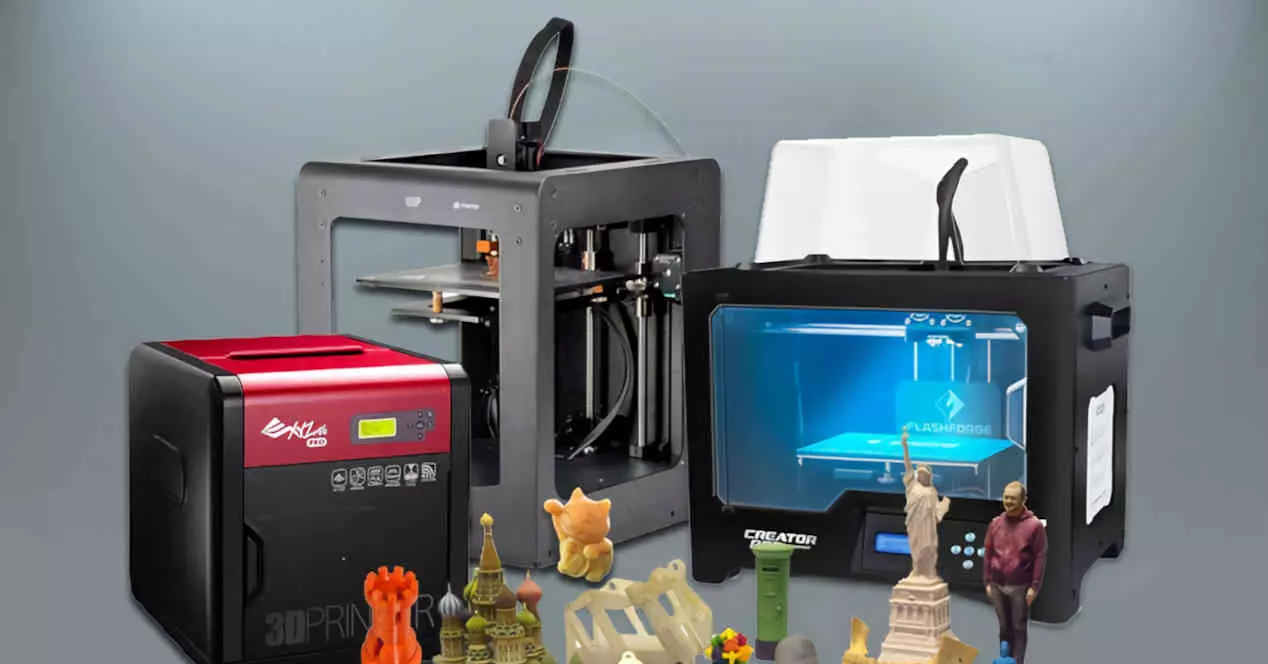
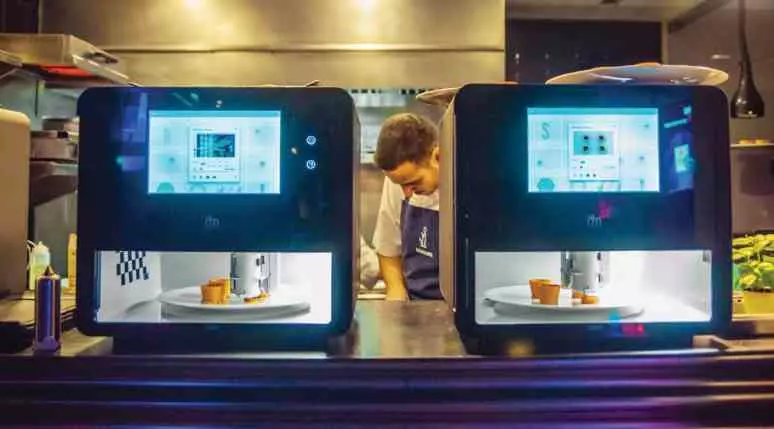
Although not only at an industrial level can we find utility for 3D printers, we also have them in the world of kitchen where instead of using the classic filaments, resin or other components, edible components are used. Nor can we forget the world of dental health, where exact molds of our teeth in poor condition are designed to be printed in 3D and replace part of our battered teeth. And by the way, and without leaving the topic of health, they are also key to creation of bone prostheses.
Another field in which 3D printing is key is in jewelry, where wax-based 3D printers allow jewelry designers to do their jobs more easily. Although at the moment this type of 3D printers are more in line

facing the education and in order to be able to show students how things work more efficiently, they can be used to print everyday systems on a small scale, so that teachers can carry out their teaching work in a much more direct and visual way by doing use not only of 3D printed models, but also to build mechanical elements and show their operation. Therefore, they not only have an outlet at an industrial level, but also at an educational level.
What type of 3D printer to buy?

The first thing to keep in mind is that 3D printers are divided into two types depending on the type of material used to make the print. Mainly, we have two types of material to work with that will dictate how our 3D printing hardware will perform. So keep in mind what kind of material you are going to work with before anything else.
Below we are going to describe the two most common types of 3D printers that you can buy, but there are specific printers that work with certain types of materials and that are highly specialized. In those cases you are not going to find them on a small scale and, therefore, you should opt for a purely industrial solution.
FDM printers
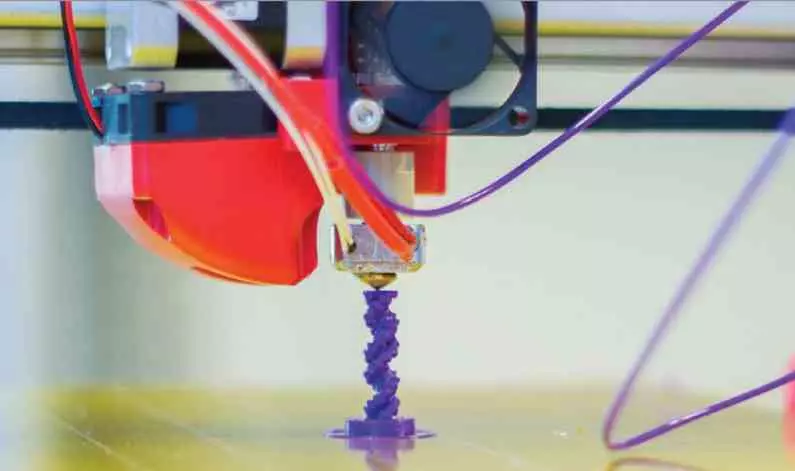
The first of these materials is a thermoplastic filament which is used by the fdm printers, whose operation is the same as that of hot glue guns. That is, they heat the plastic filament, which can be made up of different types such as carbon fibers, nylon, all of them with different levels of flexibility and hardness depending on the type of project we want to carry out. It is the most used type of filament at the domestic level.
In this type of printer there are a series of elements that we have to take into account that have to do with the level of detail that we want to achieve with them. Since we have to take into account elements such as the position of the different axes and the thickness of the layers of filament that are going to be used.
SLA and DLP 3D printers

Instead, the photosensitive resin is the other type of material used, which is shaped through a light source. Within this family we can distinguish the SLA who make use of a To be to work the material and DLP where the light source comes from a projector.
These types of printers allow a higher level of detail, which makes them used in professional fields such as in the world of dental health and jewelry. So it is common to see these printers in jewelry or dental prosthesis workshops, but we can also find them for leisure to print board game miniatures. Its only drawback is that it does not support different colors.
Features to consider
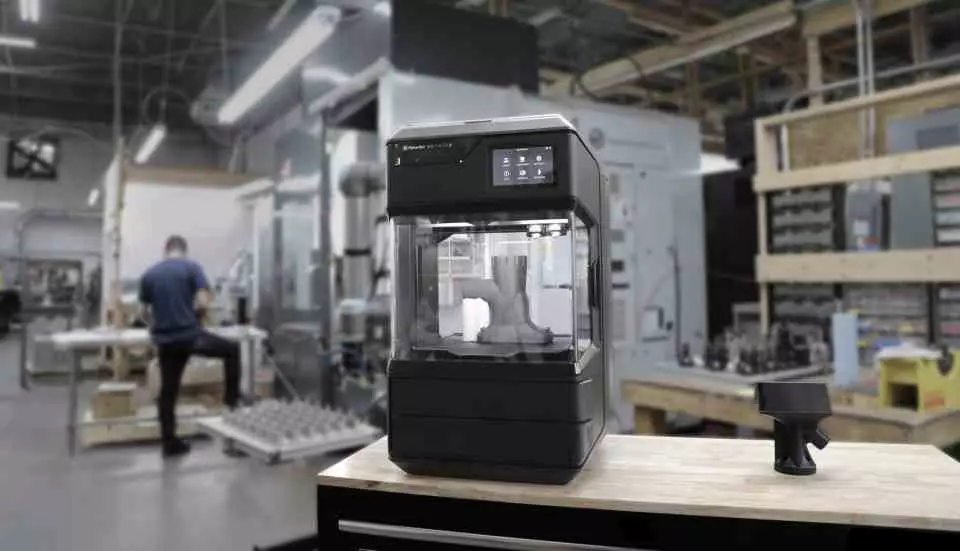
Once we know the type of printer we need, we have to have a series of key elements, for this we have to ask ourselves a series of questions.
It is not worth buying a 3D printer with a huge number of functions if we do not know how to use most of them, since these infer in the final cost of it. That is why we recommend that if you are going to buy a 3D printer for the first time, make sure that it comes already assembled. By the way, we recommend that you know how to calibrate the bed on which you will print, especially if you have opted for an FDM type. So you must make sure that the distance between the printing surface and the nozzle is within 0.2 mm
Volume needed to work

What a 3D printer does is print layer by layer in a space that is a cube and, therefore, the constructions that you can make will depend on that space. If your goal is to create small pieces that you will join later, then a compact 3D printer is the most suitable solution. Most printers are 20 x 20 x 20 centimeters, although you can also find them with larger volumes such as 22 x 22 x 25 cm.
If we have space for a larger volume 3D printer, then we can opt for the larger format one, of which we can find models with a volume of 30 x 30 x 40 cm and even 50 x 50 x 40 cm. So keep in mind what will be the application that you will give to your 3D printer when buying and what application will you give it.
Performance of a 3D printer

Buying a 3D printer for home use is not the same as buying a professional 3D printer, since the level of demand is not the same. So if you plan to create a workshop where the means of production are precisely these devices, a bad choice can leave you in a very bad situation.
The first thing you have to look at is the speed, but high, the manufacturers usually indicate the maximum speed that can be achieved by manufacturing objects with very poor precision. So if you need a high level of detail in your constructions, keep in mind that speed and level of detail are at opposite poles and, therefore, totally at odds.
Another point that you have to look at is the extrusion system if we opt for an FDM printer, here we must clarify that if we want to give it a professional use then we recommend using a double extrusion system, which helps us to considerably reduce printing times. .
Types of extrusion systems
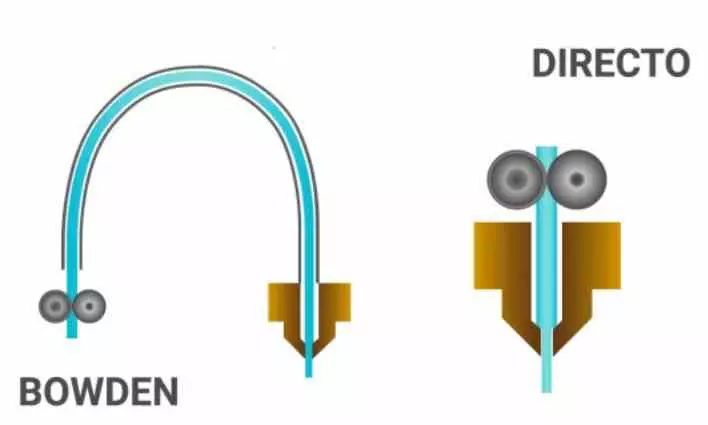
FDM printers make use of two different types of extrusions, the Bowden system is the most common and you will see it in low budget 3D printers. The problem comes when dealing with certain materials and if you are going to buy a 3D printer, keep in mind what type of materials you are going to need, since then you will have to opt for direct extrusion systems, which not only have the capacity with all kinds of materials, but they take much less time to work.