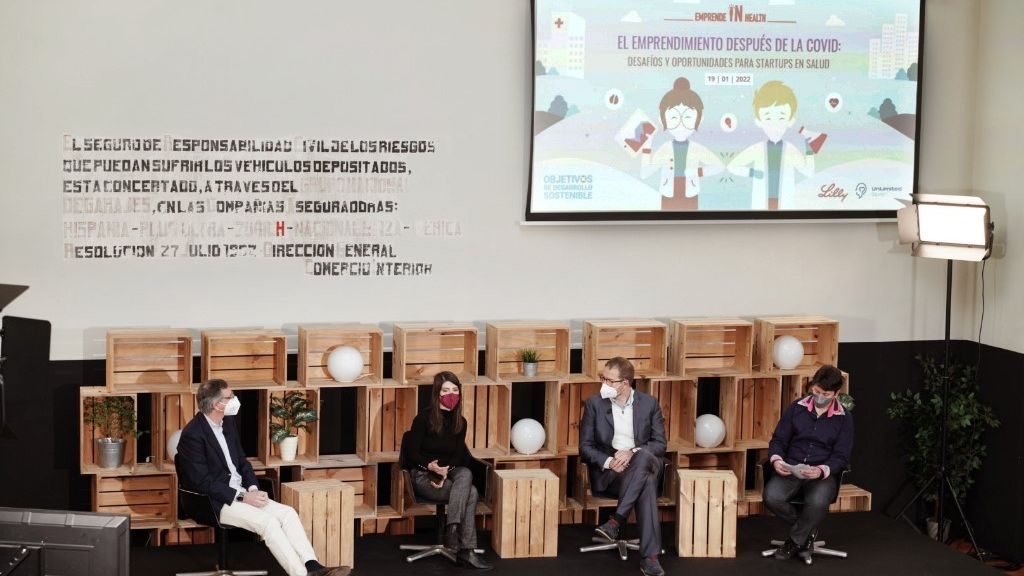
The COVID-19 pandemic has left many negative consequences. However, for half of the Spanish healthcare startups a has arisen business opportunity. This is one of the conclusions that can be drawn from the II Radiography of Startups with a Social Impact on Healthwhich was presented at the closing event of the sixth edition of Emprende inHealth, the entrepreneurship program in the health area promoted by UnLimited Spain and the pharmaceutical company Lilly.
To carry out this radiography, the data corresponding to the registration forms of the 329 entrepreneurs who have presented themselves throughout the six editions of Emprende inHealth have been used, although they have only been the 69 entrepreneurs who have completed the candidacy of the 6th edition those who have valued the impact that COVID-19 has had on their business.
Thus a 55% of these entrepreneurs consider that the pandemic has had a positive impact on startups dedicated to health, of which 89% believe that the crisis has generated a increased demand for solutions in the sector, while the remaining 11% believe that the reason is that investors have preferred to invest in these solutions due to the pandemic. On the other hand, 38% has pointed out that the pandemic has had a negative impact and the cause for the majority is that the possibilities of publicizing their projects decreased, as congresses, fairs and meetings were reduced.
Regarding the type of service or product they provide, the great growth that startups related to telemedicine and home medicine have experienced stands out, which have gone from 3% in the previous x-ray to 12% in the current one. Health apps (12%) and online service companies (19%) are the other outstanding services.
The great challenge for most entrepreneurs continues to be financing, as indicated by 16% of the participants. The study also highlights which are the Spanish regions with the most entrepreneurs in the health sector: Madrid, Catalonia and Andalusia concentrate 64% of entrepreneurship in the health sector. Regarding gender, male predominates (65%).
The summary of the X-ray indicates that the most common profile among entrepreneurs is a man, who has a limited society that sells a health service that has a direct impact on improving the quality of life of the patient, whose main challenge is financing, with a company of less than five people that receives income, but not on a recurring basis. Its business model is B2C (business-to-consumer), compared to B2B (business-to-business) that appeared in the first three years.
The panorama of the Spanish entrepreneurship ecosystem
This study was presented at the closing ceremony of the VI edition of the program, which was divided into two round tables: The first of them aimed at evaluating the panorama of the Spanish entrepreneurship ecosystem and which included the participation of Jordi García Brustenga, Director of Operations at ENISA, Diego Guinea, Director of Commercial Operations, Capabilities & Si Sigma at Lilly, and Raquel Lourenço, Project Director at UnLimited Spain.
The second table was used by entrepreneurs participating in this edition – Beatriz Crespo, Júlia Rodríguez, Carla Zaldúa, Carlos Cortijo, Alberto Fantappié and Jon Vital – to assess the results of the study from their own experience, contributing their vision of technology, innovation, digitization and impact. The journalist specializing in health issues, Rosalía Sierra, was in charge of moderating both tables.