If we had to define NVIDIA’s sword at this time in the PC gaming market, this would undoubtedly be the so-called Deep Learning Super Sampling. Since it allows you to get fans per extra second and therefore better performance when playing. Which, since time immemorial, is the way in which the performance of graphics cards is usually measured, as always with leading titles. Well then, They have managed to activate the DLSS in the NVIDIA GTX. But, does it give the expected result?
One of the advantages of NVIDIA’s super-resolution algorithm is that it grants more FPS totally free in games and since NVIDIA GTX are beginning to be limited in terms of performance, a solution like DLSS is often lacking for them. .
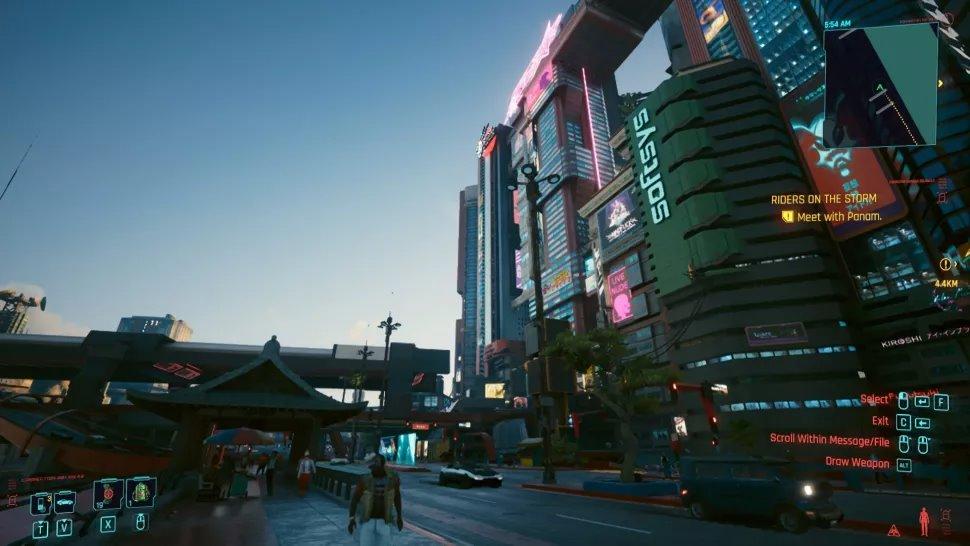
Cyberpunk allows you to use DLSS on NVIDIA GTX cards
A recent update to Cyberpunk 2077 allows enable DLSS on NVIDIA GTX graphics cards, that is, the ones that supposedly would not claim to be able to run the upsampling algorithm today for the simple fact of lacking tensor cores that are essential for its high-speed execution. If you see the instructions today necessary to carry out the algorithm, it can be done without these units, HP is not fast enough for it to be functional.
In each frame and depending on the source resolution, the one to be emitted and the power of the graphics card, NVIDIA gives a certain time, which is the time the GPU has to do the DLSS. This means that if applied to a GeForce GTX as a result, the frame rate result is worse today to the point of not recommending its use in games.
Due to the existence of AMD’s FSR, which does not use systolic arrays to run, it was believed that NVIDIA’s algorithm might not require tensor units to run today and was seen as an excuse for NVIDIA to sell their technology. Furthermore, since DLSS on the GTX does not result in a resolution increase, but rather the application of temporary Anti-Aliasing.
The only solution will remain the FSR for NVIDIA GTX
Because AMD’s FSR is an algorithm encoded today under shaders computing in HLSL, i.e. DirectX’s high-level programmable shaders language, it can run on any graphics card regardless of its brand and generation architecture. Which leads to the paradox that a solution invented by its rival is the best option to increase gaming performance for the already old GeForce GTX.
Although the GTX 1650 and 1660 among their variants are the most used graphics cards today, especially for their price, there is no doubt that they will soon be withdrawn from the market or will enter what is said to be end of life. Since its replacement, the RT 3050, has been on the market for a long time. However, it has not managed to convince a good part of the public for its massive adoption today, causing the adoption of DLSS in the low-end of the market to be slower than expected for NVIDIA