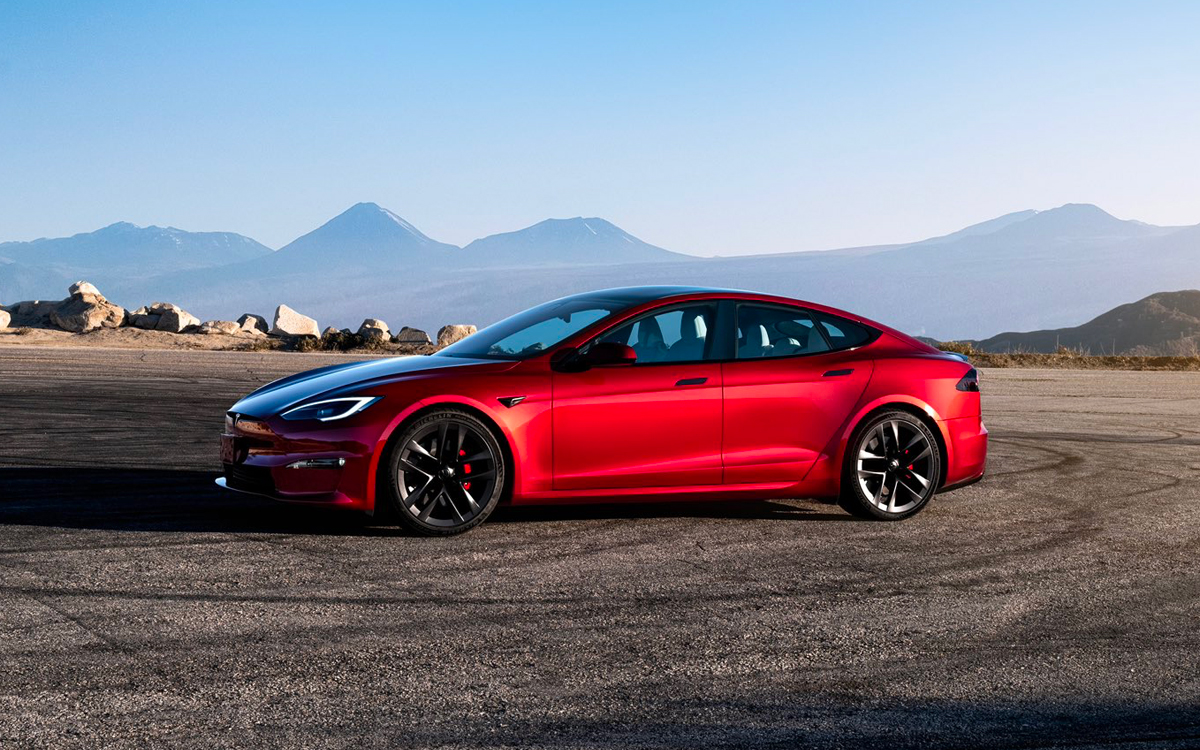
In its latest impact report, Tesla released updated statistics on the battery capacity loss of Model S and X electric vehicles after 200,000 miles (322,000 km).
Good news, Tesla has released a rare update on battery degradation in its electric vehicles, revealing that its batteries only lose about 12% of their capacity after 322,000 km. Battery degradation represents the loss of capacity and range over time with increasing mileage, which is one of the main concerns for buyers of new electric vehicles.
The longer a battery pack can operate, the longer the vehicle can stay on the road, reducing the impact of recycling on the environment. Tesla has rarely released data on battery degradation, but it has done so as part of its annual “impact report” because this data is relevant for calculating the environmental impact of its electric vehicles.
Also read – Tesla: if the price of car insurance is among the highest on the market, it’s because of the battery
Tesla batteries are long lasting
According to data released by Tesla, its batteries retain approximately 88% of their original total capacity after 322,000 km of driving. These results are similar, although slightly worse than in its previous impact report.
Let us also specify that Tesla only refers to Model S and X battery degradation, presumably because it has more long-term data on these vehicles. Interestingly, the automaker says it will soon release more data sets regarding new batteries used in newer vehicles.
” Mileage is only one factor in battery capacity retention; battery age is also an important factor. Retention figures at lower mileages likely reflect the impact of age, while higher mileage values, which come from high-use vehicles, likely reflect less of the influence of battery age. Performance of new chemistries (not shown here) may vary, and we plan to expand disclosure as soon as we have enough data. “, can we read in the report.
According to Electrek, early data from new Model 3 and Model Y vehicles also shows strong capacity retention of less than 10% after 160,000 km and less than 15% after 320,000 km, but few vehicles have achieved these miles for now. It will therefore be necessary to wait a little longer before being able to collect more data to refine this observation.
It is also important to note that degradation can vary greatly depending on the vehicle model and the battery pack itself, in particular the technologies it embeds or the chemical composition of the cells. Electrek claims for example that Tesla’s 90 kWh pack was losing battery capacity much faster than the 85 kWh pack.
What is certain is that these figures corroborate those of other studies, which all contradict the myth that electric batteries are not durable. The data also shows that the average battery retention capacity remains well below the capacity guaranteed by Tesla in its vehicle warranty. Battery degradation is a critical factor in making electric cars more durable, so Tesla’s latest data reassures customers that they can expect their batteries to last for many years. It now remains to be seen when Elon Musk will decide to release figures for the Model 3 and Model Y, the maker’s most popular cars, which now sell over a million units a year. We expect to see these numbers in next year’s Impact Report.